

Who Pays for a Slab Leak: Owner, Landlord, Tenant or HOA?
The short rule is that whoever owns the pipe is usually responsible for it. Here is how that plays out for each type of home.
Further reading: California Civil Code section 1941.1 on rental habitability.
Who pays for a slab leak? Who is usually responsible
| Your situation | Usually responsible | What to check |
|---|---|---|
| You own a single-family home | You, the homeowner | Your homeowners policy for water damage coverage |
| You rent a home or apartment | The landlord, for the plumbing | Your lease and your renters policy for belongings |
| You own a condo or townhome in an HOA | Depends on the CC&Rs: the HOA for shared lines, the owner for lines serving only the unit | The CC&Rs, the HOA’s insurance and the property manager |
| You own a single-family home in an HOA | Usually you, for pipes under your own slab | The CC&Rs for any exceptions |
| You own a commercial space | The owner or the tenant, as the lease states | The lease and the building owner’s policy |
Who pays for a slab leak depends on who owns the pipe. If you are asking who pays for a slab leak in a rental or an HOA, check the lease or the CC&Rs first. Settling who pays for a slab leak is easier with a written leak report.
If you are a tenant
- Report the problem to your landlord or property manager in writing right away, with photos and dates.
- California landlords generally must keep plumbing in good working order as part of the habitability rules in the state Civil Code. A hidden pipe failure under the slab is usually the landlord’s repair, unless the damage was caused by the tenant.
- Landlords generally need to give written notice before entering a unit, except in emergencies. A leak that is actively causing damage is usually treated as an emergency.
- Your renters insurance usually covers your belongings, not the building. See what insurance covers.
If you are a landlord or property manager
- Respond quickly to tenant reports. A leak under a slab gets worse every day it runs.
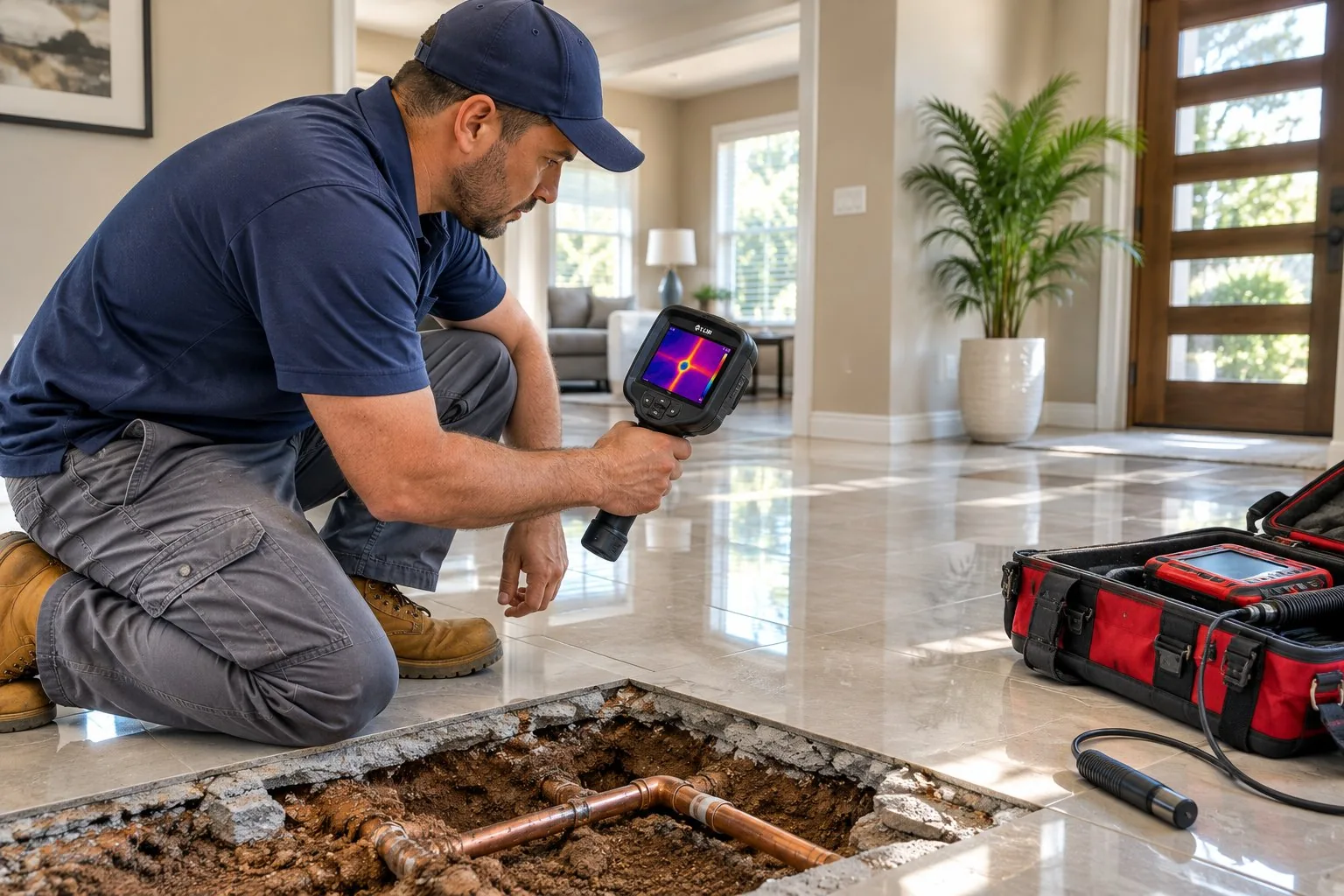
- Get a written leak report with readings and photos from a plumber who locates the leak first. See slab leak detection.
- Keep records of every report, visit and invoice for your insurer and your files.
- Check your building policy for water damage coverage.
If you are in an HOA
- Read the CC&Rs. They say which pipes the association maintains and which belong to the owner.
- Ask the property manager before you hire a plumber. Some associations require you to use their vendor or to notify them first.
- If the leak damages a neighbor’s unit, both owners’ insurers and the HOA’s master policy may be involved.
How to document a leak so the right party pays
Whoever pays will ask the same questions: where is the leak, which pipe is it, how long has it been running and what did it damage? A written report that answers them, with the readings, location photos and a repair scope, settles most disputes. Our meter test guide helps you record when you first noticed it.
For the repair budget itself, see slab leak repair cost.
Slab leak responsibility questions
Is a slab leak the landlord’s responsibility?
Generally yes. California landlords must keep the plumbing in good working order. The tenant is usually not responsible for a pipe that fails under the slab unless the tenant caused the damage.
Does the HOA pay for a slab leak in my unit?
It depends on the CC&Rs. Shared lines are often the HOA’s, while pipes that serve only your unit are often yours. Check the governing documents and ask the property manager.
Can my landlord charge me for the repair?
A landlord generally cannot charge a tenant for ordinary pipe failure. If the tenant caused the damage, the lease and local law decide. Consider talking to a tenant rights organization or an attorney.
Who pays if a leak damages my neighbor?
Liability depends on the cause and the building. Insurers for the owners and the HOA are usually involved. Document everything and notify your insurer promptly.
Can a plumber enter my unit without notice?
Landlords generally need to give written notice before entering, except in an emergency. Active leaks are usually treated as emergencies.
Need a written report for the owner or insurer?
Call and a Pomona plumber will find the leak and document it with readings and photos.
Call (909) 415-2610More on slab leaks
- Copper Pinhole Leaks: Why They Happen and What to Do
- Floor Restoration After a Slab Leak: Patching and Finishing
- How to Prevent Slab Leaks: What Homeowners Can Do
- Slab Leak Signs by Floor Type: Tile, Wood, Carpet and Vinyl
- Slab Leak Found in a Home Inspection? A Buyer’s Next Steps
- Browse the full slab leak guide
About · Contact · Privacy policy · Disclaimer