

Causes of Slab Leaks: Why Pipes Under Concrete Fail
Slab leaks rarely have one cause. Most come from years of small stresses on pipes that cannot be seen or reached. Knowing the common causes tells you whether a leak is a one-off or a warning about the rest of the line.
The short version
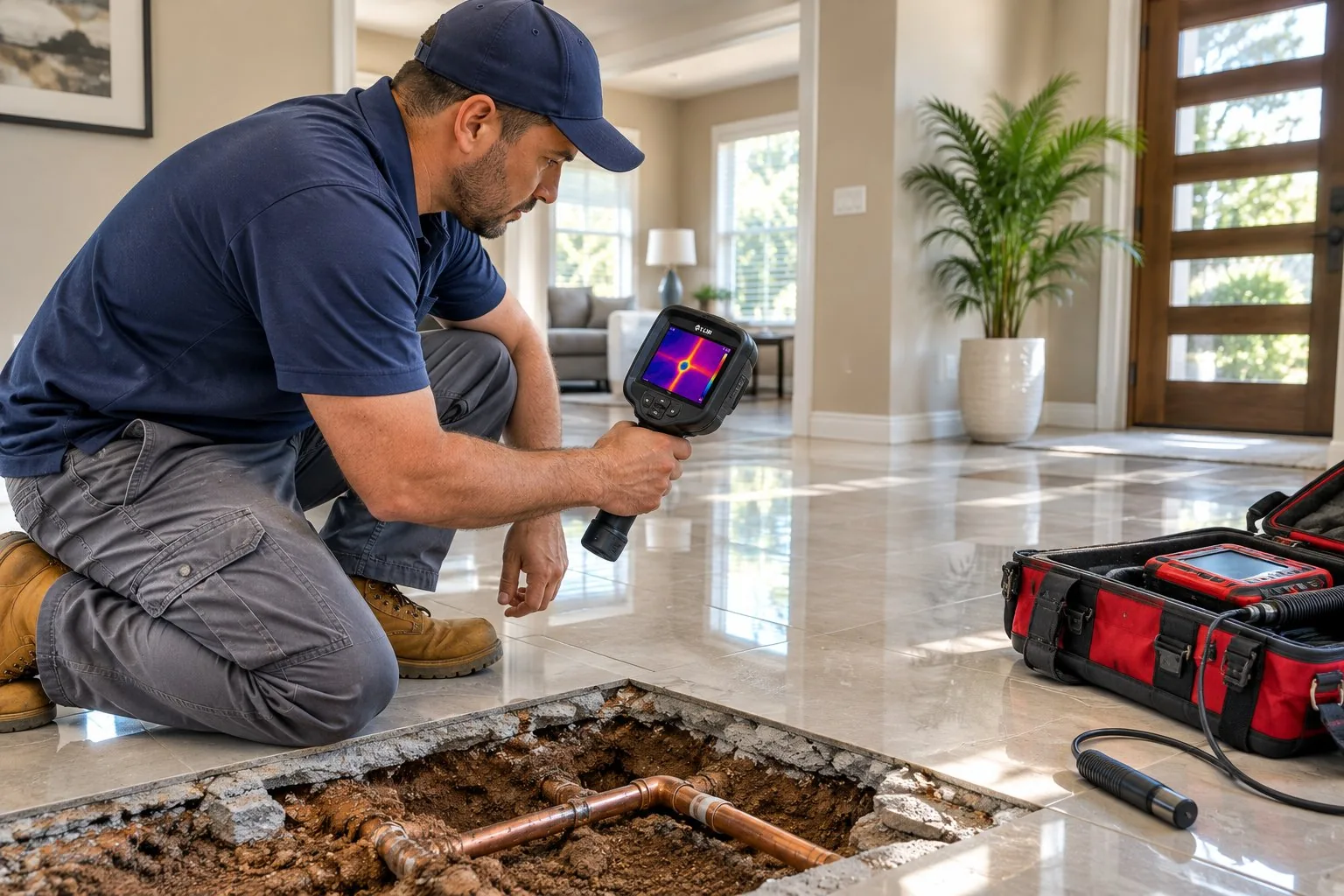
Most slab leaks come from some mix of five things: pipe age and corrosion, water pressure, pipes rubbing against concrete or gravel, ground movement, and poor materials or installation. Hot water lines tend to show up more often in slab leak stories because heat adds expansion, but cold lines leak too.
1. Age and corrosion
Copper pipe can wear from the inside. Over years, water can pit the pipe wall until a pinhole opens. A pinhole under a slab can leak for a long time before anyone notices. Much of Pomona’s housing is slab-on-grade and decades old, so original copper lines are common. Water quality varies by supply; the City of Pomona says over three-quarters of its water comes from local groundwater, with the remainder purchased from Metropolitan Water District and Three Valleys (City of Pomona Water Resources). The City’s page does not give hardness or corrosion data, so check its annual water quality report for specifics.
2. High pressure and water hammer
High street pressure, a failing pressure regulator or sudden valve shutoffs (water hammer) stress joints and thin spots. Plumbing codes generally call for a pressure-reducing valve when supply pressure is above 80 psi, and a plumber can check yours with a simple gauge on an outdoor hose bib.
3. Pipes rubbing against concrete, rebar or rock
Pipes expand and contract as water heats and cools. Where a line touches rebar, gravel or the edge of the slab, that movement can slowly wear the pipe wall. Hot lines move the most. This is one reason a leak can appear in a pipe that otherwise looks healthy.
4. Ground movement
Southern California soil shifts, and settling or earthquake movement can pull on rigid pipe under a slab. A small movement that does not crack the floor can still stress a joint.
5. Materials and installation
A poorly made joint, a kinked bend or pipe laid on sharp rock can fail early. Defects like these tend to show up as leaks in the same area or in the same part of the line.
What this means for your home
- One leak in an old line may be followed by another. Ask whether the rest of the line looks worn.
- Several leaks point toward a reroute or repipe instead of repeated spot repairs. See slab leak repair options.
- Rising bills or a warm spot are the first signs to watch. See how to tell if you have a slab leak.
- Locating the leak first keeps you from guessing. See slab leak detection.
How to lower the risk
- Have a plumber check your water pressure.
- Fix running toilets and dripping fixtures, which add stress and mask leaks.
- Replace worn shutoff valves and aging water heater connections.
- Watch your water bill and your meter, and investigate any unexplained increase.
- Ask about the pipe material and age in any home you buy.
Frequently asked questions
Are hot water lines more likely to leak under a slab?
They often show up first because a leak makes the floor feel warm. Cold lines leak too, but the signs are quieter.
Does an earthquake cause slab leaks?
Ground movement can stress pipes under a slab. A leak after an earthquake is worth testing even if you see no cracks.
Can a slab leak be caused by my water?
Water chemistry can contribute to corrosion over time. It is one of several factors, not the only one.
Can I prevent slab leaks?
You cannot fully prevent them, but controlling pressure, fixing small leaks quickly and watching your meter can catch problems earlier.
Sources: City of Pomona Water Resources Department
Keep reading
Need slab leak repair Pomona homeowners can book? See our slab leak repair Pomona page for how we work, or call (909) 415-2610.
Water running, or a warm spot on the floor?
Shut off the main if water is visible, then call. A Pomona plumber will tell you what to do next.
Call (909) 415-2610More on slab leaks
- Epoxy Pipe Lining for Slab Leaks: How It Works and Where It Fits
- How Long Does Slab Leak Repair Take?
- Pomona Water Supply and Your Pipes: What Homeowners Should Know
- Slab Leak in a Condo or HOA Home: Who Is Responsible?
- Slab Leak Myths: 8 Things Homeowners Get Wrong
- Browse the full slab leak guide
About · Contact · Privacy policy · Disclaimer
One Comment
Comments are closed.